Serving London & the surrounding area.
EMAIL US
info@fceavestrough.com
CALL US
(548) 488-3206
HOURS
MON - FRI 8AM - 7PM

The short answer
Wrap your fascia in aluminum only when the wood underneath is solid. A wrap is a thin cover that protects the board from weather; it adds no strength and stops no rot. If the board is soft, it has to be replaced first, then wrapped, because your eavestrough is screwed through the fascia and needs sound wood to hold.
A fascia wrap, sometimes called fascia capping, is a thin sheet of pre-finished metal, usually aluminum, bent to the shape of your fascia board and fastened over it. It covers the face of the board and its bottom edge, so the wood you used to scrape and paint every few years disappears behind a clean, finished surface that never needs paint.
That is what a wrap is for: looks and weather. It keeps sun, rain and snow off the face of the wood, and it gives the roof edge a crisp line that can match your eavestrough and soffit.
What a wrap is not matters just as much. It is not structural. The wood behind it still does all the work, holding the bottom edge of the roof together and carrying the eavestrough. A wrap is also not a seal. Water that gets behind it, from leaking or overflowing eavestrough above or from the roof edge itself, can still reach the board, and once it is in there it dries out far more slowly than it would on bare painted wood.
So the question is never really “wrap or no wrap”. It is whether the wood you would be wrapping is worth keeping.
When the board is sound and the water that runs past it is under control. Both conditions matter, and the second one is the one people skip.
Sound means firm wood along the whole run, especially at the corners, the joints and the low points, where water sits longest. If you want to check that yourself, our guide on how to tell if your fascia is rotting walks through the signs and the screwdriver test. Peeling paint on its own is not rot. A board that has only lost its paint is a good candidate for a wrap, because the wrap ends the painting for good.
Under control means the eavestrough on that board drains the way it should. It holds its slope, its joints do not drip, it does not spill over the front in a heavy rain, and it is not pulling away from the house. If any of that is happening, water is already running down behind it, and wrapping the board now just hides where it is going.
When both are true, wrapping the existing board is a sensible spend. You keep wood that has years left in it, you stop painting it, and the roof edge looks finished. Nobody should talk you into new boards you do not need.
Because a wrap hides rot without stopping it. Rot needs wood that stays wet. Cover a damp, soft board in metal and you have taken away its chance to dry while leaving whatever wet it still running. The rot carries on underneath, where nobody can see it.
You also lose your early warning. Bare rotting fascia shows itself with stains, peeling and soft spots you can spot from the driveway. Wrapped rotting fascia looks perfect until it does not, and by then the first visible sign is often the wrap bulging or loosening, or the eavestrough starting to sag because its fasteners have lost their grip in the wood behind. That is a bigger repair than the one you would have had if the board had been dealt with when it went soft.
Wrapping over rot is the shortcut that makes a roof edge look done on the day of the job. It is a cover-up in the literal sense, and it tends to cost more later. One customer, whose century home turned out to have fascia that had been badly modified over the years, wrote about the opposite approach: “Rather than taking shortcuts or covering up the problems, Tibor took the time to explain everything, show me exactly what they were dealing with, and come up with the best solution.” (Kay D., Google review)
Whenever the wood is soft, crumbling, split through, or no longer holding a fastener. Those boards cannot be saved by anything you put over them. The fix is to take the rotted board out, put new wood in, and wrap the new board.
A few situations come up again and again:
Replacing a board only lasts if the cause goes too. If water is still getting behind the eavestrough, new wood in the same spot gets wet the same way. Our guide on why eavestrough overflows explains the usual culprits, and in winter the same water can freeze along the roof edge and work its way behind the board.
Because your eavestrough is fastened through the fascia. Every hanger screw goes through the face of the board, and through the wrap if there is one, and into the wood behind. The wrap gives those screws nothing to hold. The board does all of it.
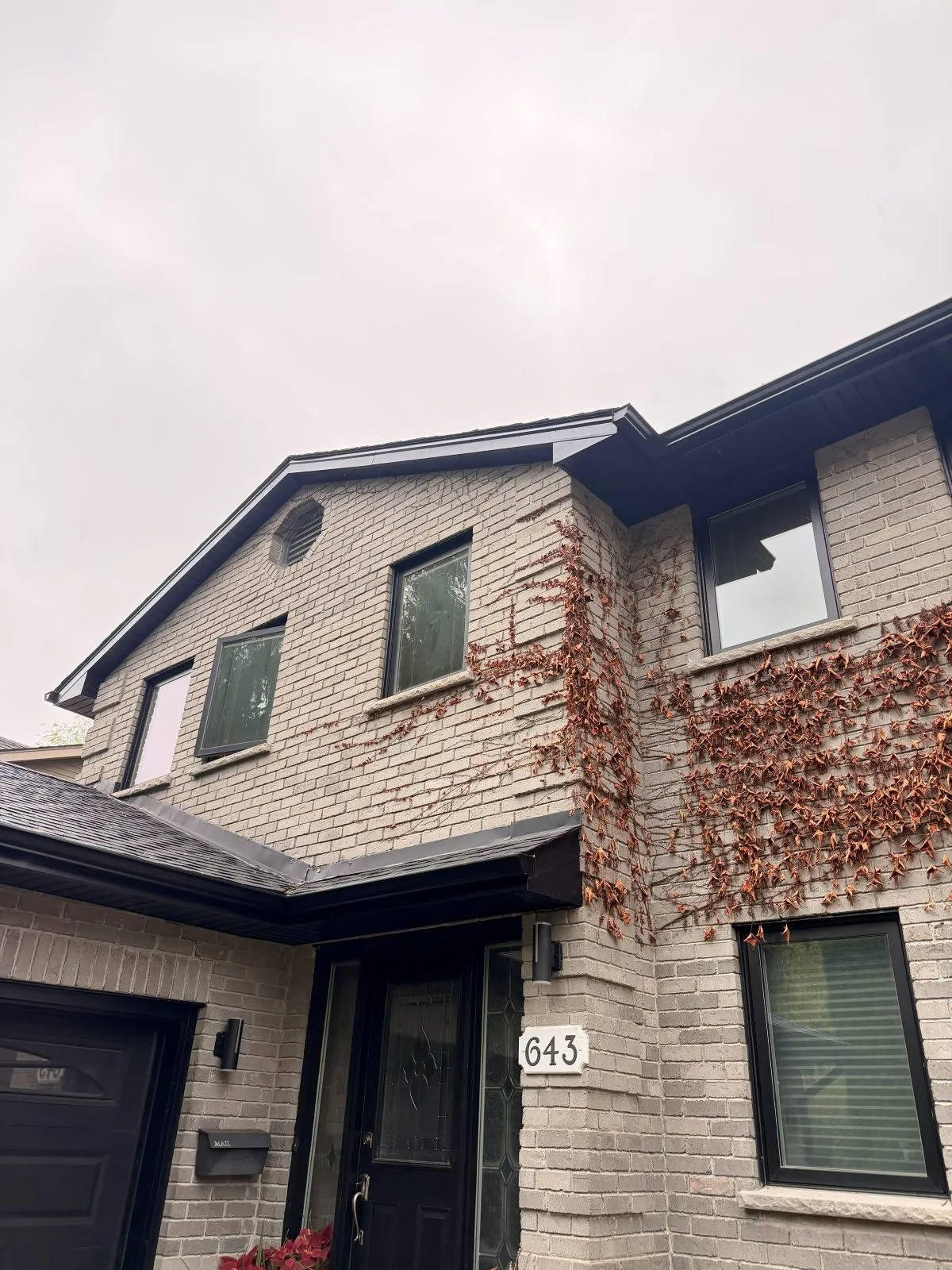
That has two consequences for your decision. First, eavestrough hung on soft wood will not stay level. The fasteners loosen, the run sags, water sits in the low spot, and the overflow soaks the board further. Second, the fascia usually cannot be replaced with the eavestrough still on it. The eavestrough has to come down first.
So the two are best decided together. If your eavestrough is near the end of its life, replacing the fascia is the natural time to replace it too, rather than rehanging an old run on new wood. If the eavestrough is sound, it can often go back up. Our guide on whether to repair or replace your eavestrough helps you work out which side of that line yours is on.
Then you cannot see the wood, and the wrap’s condition is your best clue. A wrap that lies flat and tight along the whole run, with eavestrough that holds its line, is a good sign. A wrap that has bulged, rippled, split at the corners or started pulling away with the eavestrough is a warning that the board behind it may be going.
Stains or rot on the soffit just below the fascia are worth noting too, because water that soaks the board tends to run back into the soffit behind it.
If you are having eavestrough replaced, that is the moment the board is easiest to get at. Ask whoever does the work to check the wood where the old eavestrough comes off, rather than hanging a new run straight onto a wrap nobody has looked behind. If there is soft wood under there, you want to know before the new eavestrough goes up, not two winters later.
On a soffit and fascia repair, we look at the whole edge of your roof first, show you what is causing any rot, and quote the fix that lasts. The inspection and the quote are free.
Where the board has rotted, we take the eavestrough down, replace the rotted fascia board, and cover the new board with a clean, finished wrap that matches your eavestrough. Then sound eavestrough goes back up, or new seamless eavestrough formed on site is hung on the new board.
Damaged or sagging soffit gets replaced at the same time, matched to the fascia. If you are weighing a change there, our guide to vented or solid soffit covers the choice.
One crew does the whole edge, so the colours match and one warranty covers our work. A new eavestrough on its own is usually done in a day. When fascia or soffit needs replacing too, the job can take a few days to a week, depending on material lead times, and we tell you that when we quote. You can see finished roof edges in our gallery.
No. A wrap covers the rot and keeps it damp, and the board keeps rotting where you cannot see it. The rotted board has to come out first. The new board then gets wrapped.
No. It keeps weather off the face of the wood, but water from leaking or overflowing eavestrough can still get behind it. That is why the eavestrough has to be draining properly before a wrap makes sense.
Yes. Our 10-year workmanship warranty covers new installs and replacements, so fascia, soffit and eavestrough we put in are covered. Fascia products also carry the applicable manufacturer warranty, which is the brand’s, not ours, and varies by brand. We go through the details when we quote.
We work in London and the surrounding area, including Ingersoll, St. Thomas, Strathroy-Caradoc, Stratford and Aylmer. If you think the wood behind your eavestrough has gone soft, ask us for a free inspection and we will show you what we find.
Keep reading


Straight from Google reviews
4.9127 reviews on Google
Read all 127 on Google“Good pricing and great services.”
“Great work! Tibor and Connor did an amazing job. Both were able to answer any concerns. Both very professional. I would highly recommend using Forest City Eavestrough 👌 👍”
“I was extremely impressed with the level of communication, professional information and exceptional work ethic displayed by this team. Work was completed on time and with efficiency. … Definitely would recommend this company and would call them again for any other work.”
“Forest City Eavestrough did a great job replacing our eavestroughs. Tibor gave us a great price, the work was completed in one day … and most importantly, the eavestroughs are functioning perfectly now. Thanks so much!”
“highly Recommend this company, had my eavestroughs replaced and they did a great job!”
“Very happy with the service this team provided. Good pricing, fast service, very responsive. Will definitely hire them again for future jobs.”
“Fantastic experience for us from start to finish! Would highly recommend Forest City Eavestrough to anyone seeking this service.”
“What's an amazing company and crew super fast I called them next day they did all my siding and eavestrough my house looks amazing thanks guys definitely recommend number 1 company thanks again guys”
“I got some eavestrough replaced Excellent work. Great price. Perfect corners,Very easy to deal with and the guys where on time and I had no mess to clean up”
“Kind, considerate, great quality workmanship, professionalism and on time. All important qualities of a trades person. Highly recommend this company.”
Quotes across London and area
Tell us where the house is and what you need. We'll come out, take a look and give you a price.